Saturday, June 26, 2010
Last Epic - A.C.T
A.C.T are a progressive rock band from Sweden. However, these guys are a little different from my usual choice of music. I would class them more specifically under pop-prog. That is, they write progressive material, but it's also accessible and dare I say... catchy? In fact, a few of these songs for the most part are pretty much just straight pop-rock. However, I guess since the ideas are a tad more interesting and engaging than usual modern pop-rock, I actually enjoy them.
A.C.T have released four albums since forming 1994, each of which have been incredibly consistent, something that I consider a rarity in what I've found so far. Today, I'm going to focus on their third effort, Last Epic, from 2003. This album contains some of their best tracks, in my opinion.
01. Intro (0:48)
Can't really say much about this track - it's some nice strings, and sets up for the next song. Moving on.
02. Wailings From A Building (4:21)
And now one of my couple of faves from the album - the whole song is exceptional. Starts out with a kickass riff supplemented by keyboards, and then we calm down to piano/keyboard. Almost sounds like something from ABBA, really, if it weren't for the punctuations of guitar and drums throughout. Chorus has a great chord progression, and is probably the catchiest part of the song, naturally. The song's structure is a predictable one, but this isn't trying to be some complex proggy thing - it's just pure fun. Just one last thing of note - guitar solo = best on the album. Just pure win.
03. Mr. Landlord (4:41)
Love the honkytonk in the first verse. Reminds me of something McCartney would write. In fact, putting aside the heavier instrumentation, this song is very Beatlesque. Another good solo from Andersson here.
04. Torn By A Phrase [Apartment 121] (4:21)
Another album favourite - starts out with an intro that wouldn't sound out of place in the 80's, really. The synth just has that vibe to it. The verses are the best in this song. Just excellent progression. The interlude is probably the first downright proggy thing in the album - got some quirky circus music going that is interspersed with strings or guitar or theatrical vocals - sounds like something from Queen, really.
05. Ted's Ballad [Garden] (3:47)
This is a predominantly piano affair, which sounds perhaps a little too cheesy. Not one of my favourites, that's for sure, but it's perfectly listenable.
06. Dance Of Mr. Grumble [Attic] (2:10)
An instrumental track, it's pretty cool. Solid guitar riffage backs the whole thing.
07. Wake Up [Attic] (4:28)
And for something rather different, ska takes over, although with A.C.T's now apparent customary string trio helping. Personally I'm not a huge fan of the verses, mainly because I'm not a fan of the genre as a whole. The rest of the song is fine, but not something I choose to listen to.
08. Manipulator [Apartment 121] (6:14)
The longest song on the album, it is also one of the more generic ones, unfortunately. Not much else to really say.
09. A Loaded Situation [Barbeque] (3:30)
The other main instrumental on the album, it's different in tone to Mr. Gumble. Other than that, description-wise it's pretty much the same thing.
10. The Observer [Surveying Room] (3:07)
This is similar in feel to Wailings From A Building. The progression in the chorus is nicely handled in contrast to the verses. Nice and meandering.
11. The Cause [Surveying Room] (3:27)
Another ABBA sounding tune with a twist, the chord progression at the start is one that I recognise instantly, but it's one of the underused ones that I love. This song really is sorta like something I would've liked to have been able to write years back, when I first got into composing. And so I enjoy it very much. Simple, but well put together.
12. The Effect [Surveying Room] (4:39)
The intro originally puts me off, with an 80's style vocoder going. However, then the strings come in, and things quickly change. The chorus is very anthemic, even for A.C.T. The last chorus is handled by the guest vocalist, Sara Svensson, which took me aback when I first listened. Another good song.
13. Summary [Surveying Room] (5:04)
A synth intro starts up, and another upbeat tune commences. I'm running out of things to say now, so I'll just claim that it's another decent track, and leave it at that. :P
14. Outro (1:15)
A very theatrical ending to the album, it lets the strings take centre stage. An excellent sendoff.
For those interested in giving this a go, I would recommend giving Wailings From A Building and Torn By A Phrase a go.
Overall album score: 7.9/10
Personnel:
- Herman Saming / lead and backing vocals
- Jerry Sahlin / keyboards, vocoder, lead and backing vocals
- Peter Asp / bass guitar, backing vocals, percussion
- Ola Andersson / guitars, lead and backing vocals
- Thomas Lejon / drums
Guest musicians:
- Sara Svensson / lead vocals on "The Effect"
- Thomas Erlandsson / percussion
Track Listing:
01. Intro (0:48)
02. Wailings From A Building (4:21)
03. Mr. Landlord (4:41)
04. Torn By A Phrase [Apartment 121] (4:21)
05. Ted's Ballad [Garden] (3:47)
06. Dance Of Mr. Grumble [Attic] (2:10)
07. Wake Up [Attic] (4:28)
08. Manipulator [Apartment 121] (6:14)
09. A Loaded Situation [Barbeque] (3:30)
10. The Observer [Surveying Room] (3:07)
11. The Cause [Surveying Room] (3:27)
12. The Effect [Surveying Room] (4:39)
13. Summary [Surveying Room] (5:04)
14. Outro (1:15)
Monday, June 21, 2010
California - Mr. Bungle
Mr. Bungle has written probably some of the weirdest listenable stuff in my library - they are known for their off-the-wall genre hopping and experimental structures and sounds. I think one of the major components that makes the band so good to me is their vocalist - Mike Patton. Widely regarded to be one of the most versatile vocalists in rock today, he displays an awesome range in this album.
California was their third and last album, and contains easily their most accessible material. It's my favourite album of theirs, as they showcase their take on pop, which is awesome.
01. Sweet Charity (5:06)
This has a surfer rock vibe, and mainly sticks within that spectrum. I'm not sure how I would describe the chorus, though. Pretty accessible, and decent, despite the description of surfer rock.
02. None Of Them Knew They Were Robots (6:04)
Starts off with an epic evil sounding metal riff. Then saxophone takes over, and we have some jazzy sections. The middle of the song sounds rather ominous, with what sounds like some latin being spoken. The song's structure then repeats. A trippy listen at times.
03. Retrovertigo (5:00)
My favourite song on the album, it's probably got the best explosion ever at its climax. It starts out with some very soft acoustic guitar and keyboard, and takes the form of a ballad, almost. The chorus does contain some electronic drumming, though. We then get a dissonant vibraphone solo, and then BOOM! Insanely awesome transition, with church bells ringing and drums pounding. Almost really does feel like a religious experience. Really took my breath away when I first listened.
04. The Air-Conditioned Nightmare (3:55)
Some cool vocals from Patton at the start, and then we get to... 60's pop?? And then a surfer rock thang again, and back forth etc you get the idea. About halfway through, a breakdown ensues, which is similar in style to the intro. The outro reminds me of the Beach Boys, due to the percussion and vocals. Good song.
05. Ars Moriendi (4:10)
And now we really get the first true avant garde song on the album. A very French sounding opening, the accent included. Accordian and clapping are also a component at points. Later on, we get some metal, interspersed with some nutty accordian work. Around this point, to my ears, Patton's vocals resemble Serj Tankian from System Of A Down. Frantic and fast-paced, this is fun to listen to.
06. Pink Cigarette (3:34)
This, along with Retrovertigo, is easily the most focused song - to be accurate, it sounds like a normal song. A waltz, unusually enough, considering the hell the previous song was. It's nice and calm, and comes with Patton sounding like almost like Elvis during the chorus. Of course, it comes with its little Bungle touches, such as the eretheal vocals backing the chorus, like a little alien chorus.
07. Golem II: The Bionic Vapour Boy (3:34)
This sounds creepy as hell during the intro. Then it thankfully becomes lighthearted - very electronic sounding. Reminds me of the 80's... good or bad, it's pretty cool.
08. The Holy Filament (4:04)
I love the intro section for this - the melody is melodic, yet unpredictable. Almost reminds me of African inflections at times. Also asthetically sounds beautiful, with the piano and synth backing.
Reinforcing my idea of Africa, we have what sounds like tribal drumming at points while the song builds up. And then back to the intro section. Beautiful song.
09. Vanity Fair (2:58)
This song is based around 50's pop, with vocal "ah"s and "oo"s backing, but don't you let that fool you for a second. This song is about castration. Yep. Awesomely catchy.
10. Goodbye Sober Day (4:31)
I really don't know at all how to describe the intro. Or the whole song, for that matter. It's not as nuts as that statement implies, but I can't think of anything to compare it to or any straight genre that it flatout belongs to. Halfway through, we have some awesome African-style singing again, but this is way more blatant than the last song that had that. And after that, some freaky Patton scat singing - it's really something to listen to. Then it's back to the preceding sections, and the album ends with noise.
All in all, a fantastic album, with enough pushing of the boundaries and odd genre-blendings to keep me fully engaged. I would recommend giving Retrovertigo and The Air-Conditioned Nightmare a go if you're interested.
Overall album score: 8.2/10
Personnel
- Mike Patton - artwork concept, vocals, keyboards
- Trevor Dunn - artwork concept, bass
- Danny Heifetz - drums
- Clinton "Bär" McKinnon - saxophone, keyboards
- Trey Spruance - guitar
Track Listing
01. "Sweet Charity" - 5:05
02. "None Of Them Knew They Were Robots" - 6:03
03. "Retrovertigo" - 4:59
04. "The Air-Conditioned Nightmare" - 3:55
05. "Ars Moriendi" - 4:10
06. "Pink Cigarette" - 4:55
07. "Golem II: The Bionic Vapour Boy" - 3:34
08. "The Holy Filament" - 4:04
09. "Vanity Fair" - 2:58
10. "Goodbye Sober Day" - 4:29
Saturday, June 19, 2010
Les Porches - Maneige
Maneige are one of my most listened bands on last.fm. What I find really interesting about them is the fact that they effortlessly fuse jazz, folk and classical music together in a way that is so far unsurpassed in my discoveries. A Canadian band, active mainly in the 70s, they were part of the Quebec Prog boom, where other bands such as Harmonium and Sloche also gained popular appeal.
Originally under the direction of Alain Bergeron and Jerome Langlois, they released two albums before Langlois left, and then the remaining albums had a much more percussive and jazzy feel without his influence. Personally I love both, but their second album probably wins as my favourite.
Les Porches, released in 1975, is probably the best example of what one might asthetically call chamber music, but it has all the stylings of progressive rock. Nearly everything is instrumental, apart from the climax of Les Porches de Notre Dame, where Maneige brought in a guest vocalist to do the job.
1. Les Porches de Notre-Dame (19:06)
Translation: The Porches of Notre-Dame.
I adore every second of this song. It's just so perfectly classical, and holds my interest every time. A particular section that I love is from 9:42 til 12:18. During that time, it's purely a piano solo, and it's perfect. There are simply amazing technical chops showcased here, but it isn't to the detriment to the song at all.
Another highlight is the climax, where the guest vocalist, Raoul Duguay comes in, and lets loose. He then provides trombone accompaniment til the end of the song. My favourite song on the album.
2. La Grosse Torche (1:23)
Translation - The Large Torch.
This is a beautiful classical interlude. Very short, so don't have too much to say about it, but I definitely don't miss it when I listen to the album.
3. Les Aventure de Saxinette et Clarophone (15:38)
Translation - The Adventure of the Saxophone and Clarinet.
Maniege's jazzy side comes out in this song. The percussion in this is incredibly varied, and the chord progressions heavily lean towards the jazz spectrum. The piano and vibraphone are essential components of this song, and together give a very unique atmosphere. And of course, mustn't forget the obligatory solos from the sax and clarinet. Probably the second-most challenging song behind Chromo, but still a good listen.
4. Chromo (4:11)
One of their more avant garde pieces, Chromo is built upon an interesting bass riff. The flute is the key instrument here, as it is essentially the main melody. This is quite different from the other songs on the album, as the phrasing and ideas used are more experimental. An interesting listen, but usually I prefer the other songs.
If you are interested in giving this album a go, I would suggest listening to Les Porches de Notre-Dame - that link there brings you straight to the piano solo, just because I want you to start there. :P
Overall album score: 8.2/10
Personnel
- Alain Bergeron / keyboards, flute, saxophone
- Jérome Langlois / keyboards, guitar, clarinet
- Vincent Langlois / keyboards, percussion
- Denis Lapierre / acoustic & electric guitars
- Yves Léonard / acoustic & electric basses
- Paul Picard / percussion, bongos, xylophone
- Gilles Schetagne / drums, percussion
+ Raoul Duguay / vocals, trombone
Track Listing
1. "Les Porches de Notre-Dame" - 19:14
a) "Ouverture" - 3:03
b) "Suite I" - 2:34
c) "Suite II" - 0:45
d) "Suite III" - 3:25
e) "Désouverture" - 9:38
2. "La Grosse Torche" - 1:24
3. "Les Aventures de Saxinette et Clarophone" - 15:41
a) "Chapitre I, épisode 1" - 3:47
b) "Chapitre I, épisode 2" - 5:16
c) "Chapitre II, épisode 1" - 1:31
d) "Chapitre II, épisode 2" - 2:34
e) "Chapitre III" - 2:33
4. "Chromo" - 2:36
Friday, April 23, 2010
Blomljud - Moon Safari
I only discovered this band barely twelve hours ago at the time of this writing, and it's already motivated me to write up a whole blogpost all about them. Just... wow...
Moon Safari are a Swedish band (formed in 2003), and their music is classed under the general heading of progressive rock, like 90% of the stuff I look at on this blog. However, these guys really stand out from the crowd, with their sheer melodic genius. All five members of the band sing on this album in some capacity, something that is a rarity among bands in general. Their harmonies throughout the entirety of the album (just over 100 minutes, incidentally) are simply amazing, beyond anything I had expected when I got hold of the album.
To specify their music would probably involve the words folk and symphonic prog - it's a real eclectic mix of the two, with both elements heavily present.
One of the main draws to the album for me personally is the quality of the melodies and textures employed - I haven't heard anything this refreshing since I got into the Beatles over a year ago, when I began my journey of musical enlightenment... :P
Another important thing to note is that I easily get bored from overly long epics - ie. 15 minutes plus.
However, these guys managed to get me to listen to the entirety of a 30 minute song, and I was actively listening and enjoying it throughout. I have never come across a song that has been that engaging before. I am still in awe that a band has managed to write a song that did that.
If one is to compare Moon Safari to any other bands, I would consider it a blend of the Beach Boys melodies/harmonies and the ingenuity of early pastoral Genesis. There's probably a better equivalent for the "folk" side, but that's what comes to mind when I draw comparisons. In all honesty, though, nothing really sounds like these guys.
One other thing to note is the actual mood of the album. The title, Blomljud actually means "sounds of flowers" in Swedish, and it's certainly a central theme to the album as a whole. I know that that translation will probably provoke ideas of hippies etc. but this isn't really the same. The album is a real pick-upper, but not in a cheesy way, which is really a strange thing, now that I really think about it. There are of course little slight sad undertones every now and then, but overall it's pretty positive when looking back at it. Probably another reason why I had to write a review for it as soon as I could. It's really quite an anomaly among my music collection - non-cheesy positive music. The rest of my stuff is either neutral or depressing, which can get a bit much after a while.
Anyway, I guess I should give a quick run-down of all the tracks now. :P
1. Constant Bloom (1:27)
This is an acapella track, and I personally love the implied chord progressions going on here. I've watched a few vids of these guys performing this live, and I'm very pleased to see that they can actually pull this off. Excellent starter.
9.0/10
2. Methuselah's Children (15:43)
The symphonic element is definitely present in this mini-epic, where synths frequently handle the lead sections. This is also where the prog element in general comes into play, with some unusual time signatures being introduced at will. One section in particular starting at 8:22 highlights this.
8.8/10
3. In the Countryside (5:43)
A rather poppy number, this. It probably comes the closest to cheesy that Moon Safari get - which isn't much, to clarify. However, with a name like that, it's sorta clear what tone the song is. Still damn enjoyable, though. Some nice slide guitar comes into play towards the end of the song, and my favourite part happens to be the outro, which naturally serves as the climax. Beautiful harmonies here.
8.8/10
4. Moonwalk (8:49)
The symphonic element returns again here. Chord progressions are excellent here - love the major to minor changes in songs - they aren't used enough. :P
Incidentally, this happens to be the only instrumental on the album - rather unusual for a prog band, really, considering they like to showcase their abilities more often than perhaps they should. These guys concentrate on actual songwriting, though, which is a huge breath of breath air, along with the general mood that I talked about earlier. Just pure awesome.
8.6/10
5. Bluebell (10:11)
This is a very interesting song from a theory point of view. Most of it is in 5/8 - a challenge in itself to purely keep the flow going, but these guys manage to even write something actually worth listening to. Great song, although I enjoy most of the album more than this. That's got to say something about the consistency here.
8.5/10
6. The Ghost of Flowers Past (9:46)
I freaking love the chord progression here. From major to diminished is a beautiful chord change, and it works amazingly here. Combined with the piano and mellotron, this makes for probably the most somber track on the album.
Another thing to note about this song is the creepy Arabic vibe that takes place in a few sections throughout - something that gives me the chills.
Absolutely stunning dual keyboard and guitar solo as well. Simply put, the chord progressions throughout just put a smile on my face. F***ing brilliant.
9.4/10
7. Yasgur's Farm (8:06)
This is a much more light-hearted song in mood. I put it in the same group as In the Countryside, although, it's on the symphonic side of things, as opposed to folk for Countryside. This is actually probably the weakest song on the album, but it's still damn good, which I can't really get my head around. It's insane.
8.3/10
8. Lady of the Woodlands (3:37)
This gives off a real Irish jig vibe.
... SIT BACK DOWN!
Whether you associate that with "bad" music or whatever, this is an awesome fusion of Irish music with... folk, I guess? I know the two aren't that dissimilar, but it's definitely not one or the other.
The chorus harmonies are a highlight, and it's a nice, relatively short (for once) upbeat song.
8.7/10
9. A Tale of Three and Tree (3:28)
This feels like a ballad, and has a very interesting meandering chord progression. It's the sort that I've always wanted to be able to write, so I'm always fascinated when trying to figure it out. As per custom with chord progressions, it tickles the right buttons for me, personally, and this is probably the peak of harmonising on the album. It's unreal, the melodies in this song.
8.9/10
10. Other Half of the Sky (31:44)
Unlike many massive epics, this song actually friggin properly starts, without any long, drawn-out ambient intro shit. Well, for one thing, it wouldn't fit the determined style, but it's also just so damn welcome. I hate having to wait a few minutes for an actual song to start, to only find out that it's a dull song with no colour.
Thank God it's not the case here, that's all I can say.
I'm guessing that my readers are perhaps getting a little tired of me mentioning chord progressions? :P
Well, too bad, will mention them one more time - throughout this song, they are engaging. Something that many bands could learn from, in my opinion. So many songs are ruined by dull and uninspired melodies and chord progressions.
Just wow... I can listen to this entranced for the whole time, and then it will end abruptly for me. Thirty minutes passes by incredibly fast when listening to this.
I can't believe what rating I'm giving this, for such a long song...
8.9/10
11. To Sail Beyond the Sunset (5:18)
This feels like a sister song to The Ghost of Flowers Past - the tone is similar, and both feature prominent piano. The arpeggios throughout make the song have a sort of swirling quality, and gives it a real dreamy feel. An interesting choice for the closer, but since every song is so close in quality, it makes for a fine choice.
8.8/10
The main thing that simply took me so aback by this album in summary is the fact that I enjoy every single track. That is incredibly rare, if not unprecedented in my book.
Anyway, if you are interested in taking a look, have a listen to The Ghost of Flowers Past and Lady of the Woodlands. If you enjoyed those, then this whole album is definitely your bag.
Overall album score: 8.8/10
Personnel
Simon Åkesson – lead and backing vocals, piano, moogs, mellotrons, hammond organ, piano accordion, SFX, choir arrangements
Petter Sandström – lead and backing vocals, 12-string acoustic guitar, occasional electric guitar, SFX
Pontus Åkesson – electric guitars, 6 & 12-string guitars, mandolin, backing vocals
Johan Westerlund – bass, lead vocals
Tobias Lundgren – drums, percussion, backing vocals
Track listing:
Disc One
1. "Constant Bloom" - 1:27
2. "Methuselah's Children" - 15:43
3. "In the Countryside" - 5:43
4. "Moonwalk" - 8:49
5. "Bluebells" - 10:11
6. "The Ghost of Flowers Past" - 9:46
Disc Two
1. "Yasgur's Farm - 8:06
2. "Lady of the Woodlands" - 3:37
3. "A Tale of Three and Tree" - 3:28
4. "Other Half of the Sky" - 31:44
5. "To Sail Beyond the Sunset" - 5:18
Tuesday, April 20, 2010
Illusions On A Double Dimple - Triumvirat
Triumvirat were a German prog act from the 70's, like so many are, and also submitted to the trend of pop in the 80's, like many others as well.
What sets these guys apart from the other prog acts during their heyday was their lineup - they only consisted of a keyboardist, bassist and drummer - they very rarely used guitars in their songs, and when playing live they would dispense with them entirely. This often leads to comparisons with Emerson, Lake and Palmer, who are very similar in this particular respect. My personal preference is Triumvirat, if only because they wrote far more involving and accessible tunes, although still keeping their music interesting to one who tires of modern pop music. :P
Like many bands, their second album was their break into popularity. For Triumvirat, this was Illusions On A Double Dimple, which was released in 1974. This album consists of their classic and most durable lineup, and so the songwriting on this record is tight. What I particularly like about this album is the keyboard work, particularly the classical interludes that take place every now and then. I don't hear enough of those in music for my liking.
Anyway, Illusions On A Double Dimple merely consists of technically just two songs. However, Triumvirat were nice enough to split up the two mammoths into much easier palatable parts, and I am very grateful for that. :P
Anyway, onto taking a look at the tracks themselves now.
Illusions On A Double Dimple:
Flashback - piano, woo. I love this little snippet of a song, since it mainly consists of just the aforementioned piano.
Schooldays - the dissonant piano "riff" at the start is awesome. This is the first real meat of Triumvirat on this album, and it certainly shows off their trademark style pretty succinctly in little over three minutes.
Triangle - synthesizers are abound here. Perhaps a turnoff for some, but the quality of the musicianship here really makes up for it - the usage doesn't come off as cheesy in the slightest, just a tad electronic.
Illusion - this little section returns in the penultimate section of this song, and that serves as a nice little reprise.
Dimplicity - my favourite track, despite the admittedly generic riff that the whole song is built around. I listen to this song purely for the chorus, which is strangely reminiscent of 60's pop, really. You've got the harmonious vocal backing, the chord progression is interesting yet easily palatable, and the instrumentation is familiar and solid. I dunno, I guess the particular chord progression used here really tickles my fancy. Love it.
The reprise of Illusion serves as a bridge in this song as well, just to note.
Last Dance - this song heavily borrows from Triangle to serve as a close, and it works well.
Mister Ten Percent:
Maze - and now the start of the next song certainly starts out far more progressive than Double Dimple - a complex riff interjected with random "ahs" certainly gives that impression, at least. An almost spy-like theme takes over the latter half of the song, and then we are lead into...
Dawning - this is the best classical interlude of the album - the notes just swirl around, and the dynamics are just astounding. It certainly shows off the talent of Jürgen Fritz, although without being overly showy and pretentious.
Bad Deal - some more vocal backing here helps to make this another accessible song, and I really wish it went on for longer. It's an awesome riff that's used as the backbone. Great little sax solo in there too - or at least what definitely sounds like a sax. :P
Roundabout - and now we're back to prog. Never really listened to this song that much, to be quite honest - it's never really appealed to me that much.
Lucky Girl - and now some acoustic guitar is prominent, and we're back to accessibility. Damn good song too.
Million Dollars - this mainly consists of a great keyboard solo, and I love the fact that it's not simply pounding away at keys as fast as possible, like many solos that other prog bands do - like Yes, who I've never been a huge fan of. A great ending to a very decent album, and it ends on a nice melodic note.
I would suggest giving Million Dollars a listen if you're interested, and then take a look at the rest of the album if that takes your fancy.
Overall album score: 8.0/10
Personnel:
Hans Bathelt — percussion
Jürgen Fritz — keyboards, vocals
Helmut Köllen — bass, acoustic guitars, electric guitars, lead vocals
Hans Pape — vocals, bass (left the band and was replaced by Köllen midway through recording)
Track listing:
1. "Illusions on a Double Dimple" - 23:25
"Flashback" - 0:57
"Schooldays" - 3:22
"Triangle" - 6:53
"Illusions" - 1:42
"Dimplicity" - 5:37
"Last Dance" - 4:53
2. "Mister Ten Percent" - 21:33
"Maze" - 3:03
"Dawning" - 1:02
"Bad Deal" - 1:40
"Roundabout" - 5:49
"Lucky Girl" - 5:14
"Million Dollars" - 4:42
Monday, April 19, 2010
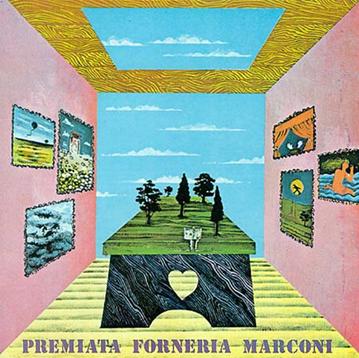
Per un Amico - Premiata Forneria Marconi
Premiata Fornieria Marconi (or PFM for short) are basically a progressive rock band (BIG SHOCK), although from Italy, for a change of culture. There is a definite difference notable between the standard English/European prog rock and the stuff that came out of Italy in the 70's - the bands from Italy had a much more medieval, or folky sound to them, and perhaps even sounded more organic than most other stuff out there, in my opinion.
PFM in particular released three great albums in the early 70's, before they adopted an English speaking singer, and started on the road down to pop in the 80's. That stuff is not quite my cup of tea, but their early albums are nothing short of amazing.
Per un Amico was their second effort, and it's considered to be their breakthrough album that gained them international recognition. I'm aware that many people actually believe their first album is their best - however, the inclusion of their best song on Per un Amico is the decider for me, personally.
So, a quick breakdown of the tracks:
1. Appena Un Po' - their best song, and the perfect opener. Shall go a bit more indepth later.
2. Generale! - a tad more avante garde, in their choice of riffs and simply tone. At points it also has some notable military-like drumwork, which is what I always think of when I think of this song. Very sporadic, especially for PFM.
3. Per Un Amico - starts off very mellow and soft, similarly to Appena Un Po'. It stays within this mood throughout for the most part, until the distortion comes in the latter half of the song.
4. Il Banchetto - very accessible beginning, despite the length and time yet to come. Probably best described as a pastoral sound, and reminds me of Harmonium heavily. Around a third into the song, however, the synths start to come in, and then sporadic sections ensue - one of which notably includes some very classical sounding piano.
5. Geranio - feels very dreamy at the start, rhythmically, and the instrumentation thankfully allows room for this mood to breath. Again, though, the remainder of the song for the most part is a rather complex structure, although a tad more subdued than Il Blanchetto or Generale!.
Now then, Appena Un Po'. Brilliant song, brilliant song.
A surreal soundscape fades in to start the song off, and then we are introduced to... some lovely Spanish guitar-work. This is slowly supplemented by more and more instruments over time, until we get to around the two minute mark. Tension is building, and building...
BOOM, and we get an amazing climax that sounds awesomely medieval - a real eclectic mix of instruments are interplaying throughout this section. An eargasm for those who are inclined. :P
Suddenly, we are back to nice soft music, almost like a ballad. The music starts building to a crescendo, and one can tell that this is going to be the chorus...
Even though this is far less intense than the opening climax, it still surpasses it. The incredibly simple, yet beautiful synth lead sends shivers down my spine, not unlike a certain song in my last review (from a long time ago, I admit. :P) The mellotron backing just makes this that much more perfect.
We then get another medieval section - I say medieval because of the tone and texture - once/if you listen, you'll understand what I mean.
The rest of the song is a somewhat standard structure - after that riff, there's another verse, and then a reprise of the chorus.
However, one quick thing of note - the outro of this song is the BEST. The manic speed and crazyness in all the instruments fighting to be heard is far more controlled than I make it sound, but god, it's just something to be heard.
So, as you can guess, I'm heavily recommending that you give Appena Un Po' a go. If you enjoy that, definitely give the rest of the album a go.
Overall album score: 8.4/10
Personnel:
Franco Mussida – Vocals, 12 String guitar, Theorbo, Mandocello, Guitar
Franz Di Cioccio – Drums, Percussion, Vocals
Mauro Pagani – Flute, Piccolo, Violin, Vocals
Giorgio Piazza – Bass, Vocals
Flavio Premoli – Spinet, Keyboards, Hammond organ, Moog, Mellotron, Tubular bells, Harpsichord, Piano, Vocals
Track listing:
1. "Appena un po'" - 7:44
2. "Generale!" - 4:18
3. "Per un Amico" - 5:24
4. "Il Banchetto" - 8:39
5. "Geranio" - 8:04
Wednesday, January 27, 2010
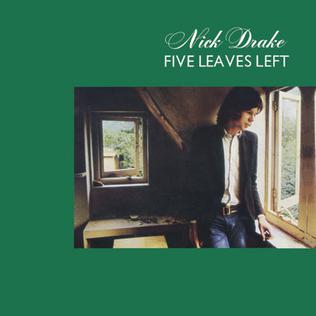
Five Leaves Left - Nick Drake
One song in that last review reminded me of Nick Drake, so I figured hey, may as well make this next one about one of his albums.
Nick Drake was basically a singer-songwriter based primarily in folk, and was active from the late 60s to the early 70s, until his untimely death in 1974 at the young age of 26. A real shame, because some of the music he wrote is possibly some of the most poignant and beautiful stuff I've ever heard.
His debut album, Five Leaves Left, was released in 1969, and contains some of his best material in his short career, in my opinion. I know some people see his last album, Pink Moon, as his masterpiece, and that's probably true, taking the lyrics into account. However, I'm not really the type to really listen to lyrics - the voice is just another instrument to me.
One thing that has to be said is that Robert Kirby is a genius. Well, and Harry Robinson, who helped on one track. We'll get to that one later. :P
Those two guys there, mainly Kirby, arranged the strings for the whole album. And they are incredible. Gushing over... for now. :P
If one was to try and identify a season with this album, autumn would be the one most people would commonly pick. The mood throughout is somber and wistful, and possibly unique. Understandably, some people don't like this album as much as other Drake albums because it's very similar throughout - no rest or respite, so to speak. However, peh, I don't care, this blog is about my tastes. :P
Onto the songs themselves, finally.
1. Time Has Told Me (4:27)
This is one of lesser listened tracks on the album for me, personally. It's a fine song, don't get me wrong, but yeah, just perhaps a little dull. Perfectly listenable, though, but I don't actively seek it out to listen to.
7.5/10
2. River Man (4:23)
And now already the best song on the album? Damn.
This song is AMAZING. I'm not kidding here when I'm saying that it's the best song I've looked at so far on this blog. One of the few songs in the world that can give me chills down my spine, thanks to the fantastic string arrangements. They don't make themselves the star of the show, they just quietly brood in the background, adding atmosphere. Just perfect.
But, there is one part in the middle of the song that is the spine-tingler for me - Drake stops singing, and an instrumental section takes over, and the strings finally cry. Just phenomenal. You have to hear the song at least once just to hear that. And I personally think it gets better and better the more you listen to it - when I first listened to the album, I didn't really give it a second thought, just noting the above average arrangements. However, it's now soared to the very top of my last.fm most listened songs list.
Drake himself always envisioned this song as the centrepiece of Five Leaves Left, and rightfully so. An interesting fact - arranger Robert Kirby was commissioned to do the whole album, but he felt he couldn't do this track justice. So, he called in fellow composer Harry Robinson, and instructed him to echo the tones of the classical composers Delius and Ravel. Certainly shows, that's for sure, even for those who don't know who the hell those guys are.
Okay, that's enough about this song - just listen to it on YouTube already, and my job should hopefully be done. :P
9.6/10
3. Three Hours (6:15)
This is a relatively straightforward folk affair. Pleasant, but a little too similar to the first track in terms of interestingness. I do like the fingerpicking towards the end of the song, though.
7.6/10
4. Way To Blue (3:11)
This is an unusual song for Drake in the fact that he doesn't play guitar on it for once. This is just him singing, plus some strings. Beautiful, but perhaps a tad dramatic for some people. Not on the same level as River Man, but definitely a good listen.
8.7/10
5. Day Is Done (2:29)
This was the first song I ever heard of Drake's - it was actually a cover, funnily enough. That spurred me to listen to the original, and from there, my liking for Drake's music grew.
What drew me to this song in the first place was the chord progression. Actually fairly simple, and not that rare, I guess it was just the combination of all the elements coming together that made it fresh. The arrangement, perhaps echoing slightly of the Beatles' hit Yesterday, is great, as per usual from Kirby. A good introduction to Drake's music, I think.
8.8/10
6. Cello Song (4:48)
I know this song feels ethnical to some degree, what with the use of the cello, but I can't put my finger on what feel it has. It's relatively typical folk music, but it's been done damn well here.
8.5/10
7. The Thoughts Of Mary Jane (3:22)
Some flute in this song - a change from the usual arrangements so far. For some reason, I always thought that Drake played the flute here, but I was mistaken. Some beautiful melodies in this one.
8.6/10
8. Man In A Shed (3:55)
More relatively standard folk here. However, (I'm getting tired of saying this now, but it's all I can say, really :P) it's done well.
8.3/10
9. Fruit Tree (4:49)
This reminds me of Day Is Done - similar tone to the chord progression. One thing I love in this is the instrumental interlude, with the oboe taking the lead. Another example of beauty in this album. Arrangements in this song are probably second-best to River Man.
9.0/10
10. Saturday Sun (4:05)
This is another song that definitely stands out from the rest. Drake finally takes up arms with a different instrument - it's piano for this song. Also, this is the only song on the album that actually has a drumkit - the rest either don't, or just have congos. A little use of vibraphone here and there works nicely. A nice, relatively happy way to end the album (considering the rest of it).
8.8/10
So, all in all, probably the best folk album I've heard, although to be fair, I haven't listened to THAT many. And it also depends on what you define as folk. But yeah, enough of my rambling.
If you enjoy River Man and Day Is Done, you should definitely check out the album. If there is satisfaction with those two songs alone, you won't be disappointed.
Overall album score: 8.5/10
Subscribe to:
Comments (Atom)