Friday, April 23, 2010

Blomljud - Moon Safari


I only discovered this band barely twelve hours ago at the time of this writing, and it's already motivated me to write up a whole blogpost all about them. Just... wow...

Moon Safari are a Swedish band (formed in 2003), and their music is classed under the general heading of progressive rock, like 90% of the stuff I look at on this blog. However, these guys really stand out from the crowd, with their sheer melodic genius. All five members of the band sing on this album in some capacity, something that is a rarity among bands in general. Their harmonies throughout the entirety of the album (just over 100 minutes, incidentally) are simply amazing, beyond anything I had expected when I got hold of the album.
To specify their music would probably involve the words folk and symphonic prog - it's a real eclectic mix of the two, with both elements heavily present.

One of the main draws to the album for me personally is the quality of the melodies and textures employed - I haven't heard anything this refreshing since I got into the Beatles over a year ago, when I began my journey of musical enlightenment... :P

Another important thing to note is that I easily get bored from overly long epics - ie. 15 minutes plus.
However, these guys managed to get me to listen to the entirety of a 30 minute song, and I was actively listening and enjoying it throughout. I have never come across a song that has been that engaging before. I am still in awe that a band has managed to write a song that did that.

If one is to compare Moon Safari to any other bands, I would consider it a blend of the Beach Boys melodies/harmonies and the ingenuity of early pastoral Genesis. There's probably a better equivalent for the "folk" side, but that's what comes to mind when I draw comparisons. In all honesty, though, nothing really sounds like these guys.

One other thing to note is the actual mood of the album. The title, Blomljud actually means "sounds of flowers" in Swedish, and it's certainly a central theme to the album as a whole. I know that that translation will probably provoke ideas of hippies etc. but this isn't really the same. The album is a real pick-upper, but not in a cheesy way, which is really a strange thing, now that I really think about it. There are of course little slight sad undertones every now and then, but overall it's pretty positive when looking back at it. Probably another reason why I had to write a review for it as soon as I could. It's really quite an anomaly among my music collection - non-cheesy positive music. The rest of my stuff is either neutral or depressing, which can get a bit much after a while.

Anyway, I guess I should give a quick run-down of all the tracks now. :P

1. Constant Bloom (1:27)
This is an acapella track, and I personally love the implied chord progressions going on here. I've watched a few vids of these guys performing this live, and I'm very pleased to see that they can actually pull this off. Excellent starter.
9.0/10

2. Methuselah's Children (15:43)
The symphonic element is definitely present in this mini-epic, where synths frequently handle the lead sections. This is also where the prog element in general comes into play, with some unusual time signatures being introduced at will. One section in particular starting at 8:22 highlights this.
8.8/10

3. In the Countryside (5:43)
A rather poppy number, this. It probably comes the closest to cheesy that Moon Safari get - which isn't much, to clarify. However, with a name like that, it's sorta clear what tone the song is. Still damn enjoyable, though. Some nice slide guitar comes into play towards the end of the song, and my favourite part happens to be the outro, which naturally serves as the climax. Beautiful harmonies here.
8.8/10

4. Moonwalk (8:49)
The symphonic element returns again here. Chord progressions are excellent here - love the major to minor changes in songs - they aren't used enough. :P
Incidentally, this happens to be the only instrumental on the album - rather unusual for a prog band, really, considering they like to showcase their abilities more often than perhaps they should. These guys concentrate on actual songwriting, though, which is a huge breath of breath air, along with the general mood that I talked about earlier. Just pure awesome.
8.6/10

5. Bluebell (10:11)
This is a very interesting song from a theory point of view. Most of it is in 5/8 - a challenge in itself to purely keep the flow going, but these guys manage to even write something actually worth listening to. Great song, although I enjoy most of the album more than this. That's got to say something about the consistency here.
8.5/10

6. The Ghost of Flowers Past (9:46)
I freaking love the chord progression here. From major to diminished is a beautiful chord change, and it works amazingly here. Combined with the piano and mellotron, this makes for probably the most somber track on the album.
Another thing to note about this song is the creepy Arabic vibe that takes place in a few sections throughout - something that gives me the chills.
Absolutely stunning dual keyboard and guitar solo as well. Simply put, the chord progressions throughout just put a smile on my face. F***ing brilliant.
9.4/10

7. Yasgur's Farm (8:06)
This is a much more light-hearted song in mood. I put it in the same group as In the Countryside, although, it's on the symphonic side of things, as opposed to folk for Countryside. This is actually probably the weakest song on the album, but it's still damn good, which I can't really get my head around. It's insane.
8.3/10

8. Lady of the Woodlands (3:37)
This gives off a real Irish jig vibe.
... SIT BACK DOWN!
Whether you associate that with "bad" music or whatever, this is an awesome fusion of Irish music with... folk, I guess? I know the two aren't that dissimilar, but it's definitely not one or the other.
The chorus harmonies are a highlight, and it's a nice, relatively short (for once) upbeat song.
8.7/10

9. A Tale of Three and Tree (3:28)
This feels like a ballad, and has a very interesting meandering chord progression. It's the sort that I've always wanted to be able to write, so I'm always fascinated when trying to figure it out. As per custom with chord progressions, it tickles the right buttons for me, personally, and this is probably the peak of harmonising on the album. It's unreal, the melodies in this song.
8.9/10

10. Other Half of the Sky (31:44)
Unlike many massive epics, this song actually friggin properly starts, without any long, drawn-out ambient intro shit. Well, for one thing, it wouldn't fit the determined style, but it's also just so damn welcome. I hate having to wait a few minutes for an actual song to start, to only find out that it's a dull song with no colour.
Thank God it's not the case here, that's all I can say.
I'm guessing that my readers are perhaps getting a little tired of me mentioning chord progressions? :P
Well, too bad, will mention them one more time - throughout this song, they are engaging. Something that many bands could learn from, in my opinion. So many songs are ruined by dull and uninspired melodies and chord progressions.
Just wow... I can listen to this entranced for the whole time, and then it will end abruptly for me. Thirty minutes passes by incredibly fast when listening to this.
I can't believe what rating I'm giving this, for such a long song...
8.9/10

11. To Sail Beyond the Sunset (5:18)
This feels like a sister song to The Ghost of Flowers Past - the tone is similar, and both feature prominent piano. The arpeggios throughout make the song have a sort of swirling quality, and gives it a real dreamy feel. An interesting choice for the closer, but since every song is so close in quality, it makes for a fine choice.
8.8/10

The main thing that simply took me so aback by this album in summary is the fact that I enjoy every single track. That is incredibly rare, if not unprecedented in my book.
Anyway, if you are interested in taking a look, have a listen to The Ghost of Flowers Past and Lady of the Woodlands. If you enjoyed those, then this whole album is definitely your bag.

Overall album score: 8.8/10

Personnel

Simon Åkesson – lead and backing vocals, piano, moogs, mellotrons, hammond organ, piano accordion, SFX, choir arrangements
Petter Sandström – lead and backing vocals, 12-string acoustic guitar, occasional electric guitar, SFX
Pontus Åkesson – electric guitars, 6 & 12-string guitars, mandolin, backing vocals
Johan Westerlund – bass, lead vocals
Tobias Lundgren – drums, percussion, backing vocals

Track listing:

Disc One
1. "Constant Bloom" - 1:27
2. "Methuselah's Children" - 15:43
3. "In the Countryside" - 5:43
4. "Moonwalk" - 8:49
5. "Bluebells" - 10:11
6. "The Ghost of Flowers Past" - 9:46

Disc Two
1. "Yasgur's Farm - 8:06
2. "Lady of the Woodlands" - 3:37
3. "A Tale of Three and Tree" - 3:28
4. "Other Half of the Sky" - 31:44
5. "To Sail Beyond the Sunset" - 5:18

Tuesday, April 20, 2010

Illusions On A Double Dimple - Triumvirat


Triumvirat were a German prog act from the 70's, like so many are, and also submitted to the trend of pop in the 80's, like many others as well.
What sets these guys apart from the other prog acts during their heyday was their lineup - they only consisted of a keyboardist, bassist and drummer - they very rarely used guitars in their songs, and when playing live they would dispense with them entirely. This often leads to comparisons with Emerson, Lake and Palmer, who are very similar in this particular respect. My personal preference is Triumvirat, if only because they wrote far more involving and accessible tunes, although still keeping their music interesting to one who tires of modern pop music. :P

Like many bands, their second album was their break into popularity. For Triumvirat, this was Illusions On A Double Dimple, which was released in 1974. This album consists of their classic and most durable lineup, and so the songwriting on this record is tight. What I particularly like about this album is the keyboard work, particularly the classical interludes that take place every now and then. I don't hear enough of those in music for my liking.
Anyway, Illusions On A Double Dimple merely consists of technically just two songs. However, Triumvirat were nice enough to split up the two mammoths into much easier palatable parts, and I am very grateful for that. :P
Anyway, onto taking a look at the tracks themselves now.

Illusions On A Double Dimple:

Flashback - piano, woo. I love this little snippet of a song, since it mainly consists of just the aforementioned piano.
Schooldays - the dissonant piano "riff" at the start is awesome. This is the first real meat of Triumvirat on this album, and it certainly shows off their trademark style pretty succinctly in little over three minutes.
Triangle - synthesizers are abound here. Perhaps a turnoff for some, but the quality of the musicianship here really makes up for it - the usage doesn't come off as cheesy in the slightest, just a tad electronic.
Illusion - this little section returns in the penultimate section of this song, and that serves as a nice little reprise.
Dimplicity - my favourite track, despite the admittedly generic riff that the whole song is built around. I listen to this song purely for the chorus, which is strangely reminiscent of 60's pop, really. You've got the harmonious vocal backing, the chord progression is interesting yet easily palatable, and the instrumentation is familiar and solid. I dunno, I guess the particular chord progression used here really tickles my fancy. Love it.
The reprise of Illusion serves as a bridge in this song as well, just to note.
Last Dance - this song heavily borrows from Triangle to serve as a close, and it works well.

Mister Ten Percent:
Maze - and now the start of the next song certainly starts out far more progressive than Double Dimple - a complex riff interjected with random "ahs" certainly gives that impression, at least. An almost spy-like theme takes over the latter half of the song, and then we are lead into...
Dawning - this is the best classical interlude of the album - the notes just swirl around, and the dynamics are just astounding. It certainly shows off the talent of Jürgen Fritz, although without being overly showy and pretentious.
Bad Deal - some more vocal backing here helps to make this another accessible song, and I really wish it went on for longer. It's an awesome riff that's used as the backbone. Great little sax solo in there too - or at least what definitely sounds like a sax. :P
Roundabout - and now we're back to prog. Never really listened to this song that much, to be quite honest - it's never really appealed to me that much.
Lucky Girl - and now some acoustic guitar is prominent, and we're back to accessibility. Damn good song too.
Million Dollars - this mainly consists of a great keyboard solo, and I love the fact that it's not simply pounding away at keys as fast as possible, like many solos that other prog bands do - like Yes, who I've never been a huge fan of. A great ending to a very decent album, and it ends on a nice melodic note.

I would suggest giving Million Dollars a listen if you're interested, and then take a look at the rest of the album if that takes your fancy.

Overall album score: 8.0/10

Personnel:
Hans Bathelt — percussion
Jürgen Fritz — keyboards, vocals
Helmut Köllen — bass, acoustic guitars, electric guitars, lead vocals
Hans Pape — vocals, bass (left the band and was replaced by Köllen midway through recording)

Track listing:
1. "Illusions on a Double Dimple" - 23:25
    "Flashback" - 0:57
    "Schooldays" - 3:22
    "Triangle" - 6:53
    "Illusions" - 1:42
    "Dimplicity" - 5:37
    "Last Dance" - 4:53
2. "Mister Ten Percent" - 21:33
    "Maze" - 3:03
    "Dawning" - 1:02
    "Bad Deal" - 1:40
    "Roundabout" - 5:49
    "Lucky Girl" - 5:14
    "Million Dollars" - 4:42

Monday, April 19, 2010

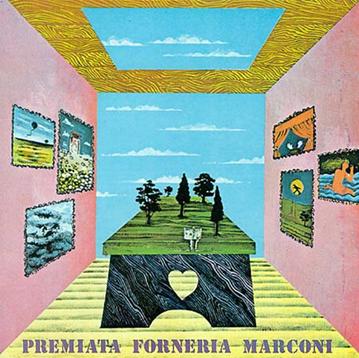
Per un Amico - Premiata Forneria Marconi


Premiata Fornieria Marconi (or PFM for short) are basically a progressive rock band (BIG SHOCK), although from Italy, for a change of culture. There is a definite difference notable between the standard English/European prog rock and the stuff that came out of Italy in the 70's - the bands from Italy had a much more medieval, or folky sound to them, and perhaps even sounded more organic than most other stuff out there, in my opinion.

PFM in particular released three great albums in the early 70's, before they adopted an English speaking singer, and started on the road down to pop in the 80's. That stuff is not quite my cup of tea, but their early albums are nothing short of amazing.
Per un Amico was their second effort, and it's considered to be their breakthrough album that gained them international recognition. I'm aware that many people actually believe their first album is their best - however, the inclusion of their best song on Per un Amico is the decider for me, personally.

So, a quick breakdown of the tracks:
1. Appena Un Po' - their best song, and the perfect opener. Shall go a bit more indepth later.
2. Generale! - a tad more avante garde, in their choice of riffs and simply tone. At points it also has some notable military-like drumwork, which is what I always think of when I think of this song. Very sporadic, especially for PFM.
3. Per Un Amico - starts off very mellow and soft, similarly to Appena Un Po'. It stays within this mood throughout for the most part, until the distortion comes in the latter half of the song.
4. Il Banchetto - very accessible beginning, despite the length and time yet to come. Probably best described as a pastoral sound, and reminds me of Harmonium heavily. Around a third into the song, however, the synths start to come in, and then sporadic sections ensue - one of which notably includes some very classical sounding piano.
5. Geranio - feels very dreamy at the start, rhythmically, and the instrumentation thankfully allows room for this mood to breath. Again, though, the remainder of the song for the most part is a rather complex structure, although a tad more subdued than Il Blanchetto or Generale!.

Now then, Appena Un Po'. Brilliant song, brilliant song.
A surreal soundscape fades in to start the song off, and then we are introduced to... some lovely Spanish guitar-work. This is slowly supplemented by more and more instruments over time, until we get to around the two minute mark. Tension is building, and building...
BOOM, and we get an amazing climax that sounds awesomely medieval - a real eclectic mix of instruments are interplaying throughout this section. An eargasm for those who are inclined. :P
Suddenly, we are back to nice soft music, almost like a ballad. The music starts building to a crescendo, and one can tell that this is going to be the chorus...
Even though this is far less intense than the opening climax, it still surpasses it. The incredibly simple, yet beautiful synth lead sends shivers down my spine, not unlike a certain song in my last review (from a long time ago, I admit. :P) The mellotron backing just makes this that much more perfect.
We then get another medieval section - I say medieval because of the tone and texture - once/if you listen, you'll understand what I mean.
The rest of the song is a somewhat standard structure - after that riff, there's another verse, and then a reprise of the chorus.
However, one quick thing of note - the outro of this song is the BEST. The manic speed and crazyness in all the instruments fighting to be heard is far more controlled than I make it sound, but god, it's just something to be heard.

So, as you can guess, I'm heavily recommending that you give Appena Un Po' a go. If you enjoy that, definitely give the rest of the album a go.

Overall album score: 8.4/10

Personnel:
Franco Mussida – Vocals, 12 String guitar, Theorbo, Mandocello, Guitar
Franz Di Cioccio – Drums, Percussion, Vocals
Mauro Pagani – Flute, Piccolo, Violin, Vocals
Giorgio Piazza – Bass, Vocals
Flavio Premoli – Spinet, Keyboards, Hammond organ, Moog, Mellotron, Tubular bells, Harpsichord, Piano, Vocals

Track listing:
1. "Appena un po'" - 7:44
2. "Generale!" - 4:18
3. "Per un Amico" - 5:24
4. "Il Banchetto" - 8:39
5. "Geranio" - 8:04